Knowledge Systems at Scale
Building a Governed, Scalable Product & Design Knowledge Ecosystem
Context
As the Product organization grew, knowledge lived everywhere—SharePoint, Loop, documents, inboxes, and tribal memory. Teams spent unnecessary time searching for information, recreating artifacts, or relying on individuals to know where things lived.
There was no shared information architecture, no consistent templates, and no clear ownership model for keeping knowledge up to date..
Problem
Knowledge was fragmented and difficult to discover
Documentation quality and structure varied widely
Ownership and update responsibility were unclear
Teams relied on people rather than systems to find information
Without a scalable approach, knowledge quickly became outdated or unused.
My Role
Design Program Manager / Design Operations Lead (Knowledge Systems)
I owned the strategy and execution for building a centralized, governed knowledge system that could scale across Product, Design, and Research. This included defining information architecture, templates, governance, and contribution models—while ensuring teams could actually adopt and maintain the system.
What I Built
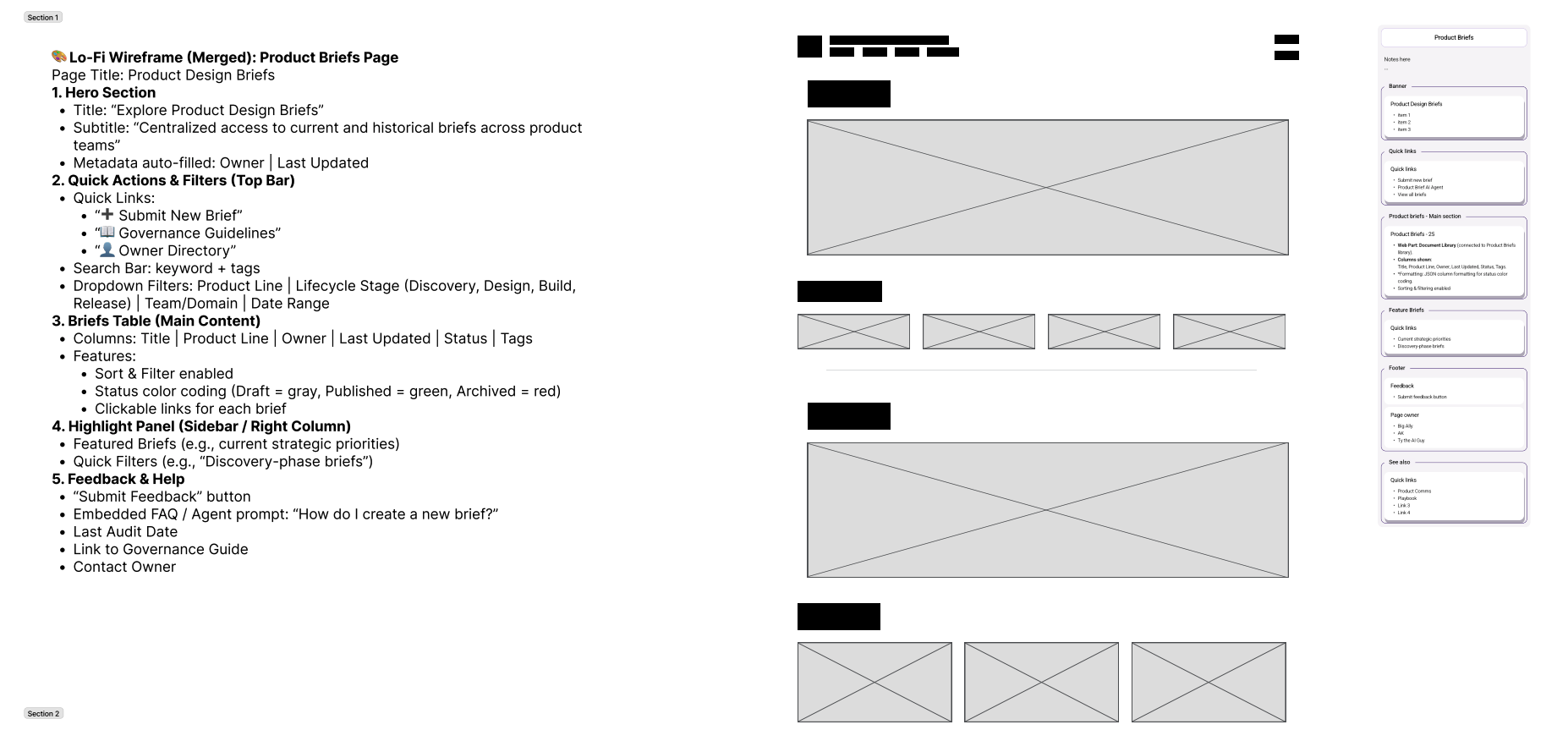
Information Architecture & Navigation Model
I designed a clear, role-aware information architecture that organized content into intuitive hubs and sub-sites. Navigation was structured to reflect how teams actually work, not how tools are organized.
A clear information architecture reduced cognitive load and improved findability.
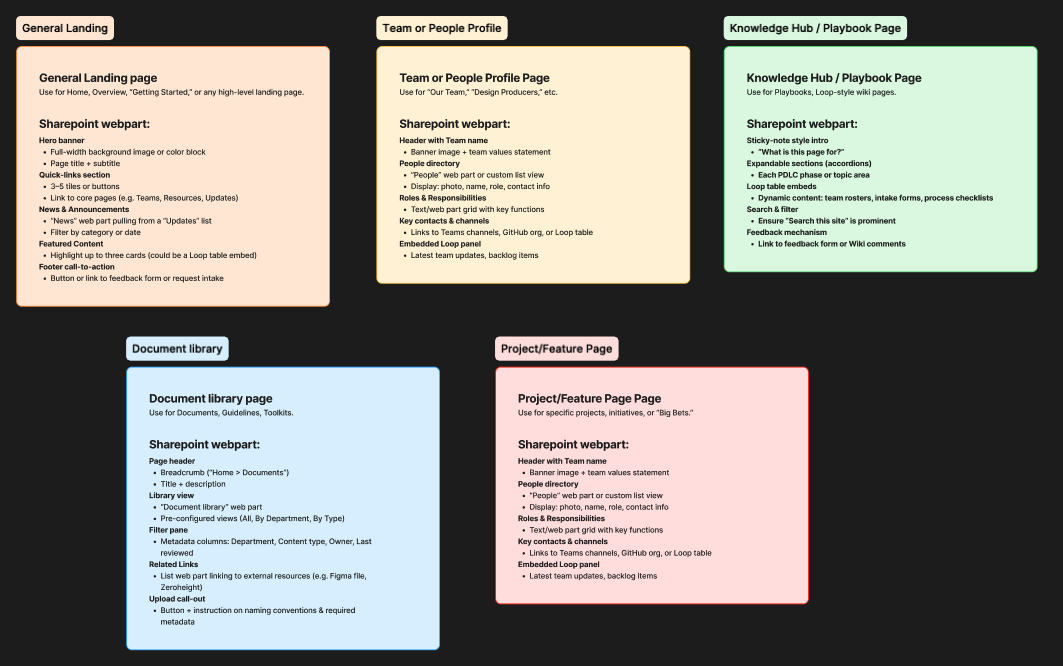
Reusable Page Templates
To create consistency and reduce friction, I developed standardized page templates for common content types such as:
Home and overview pages
Team and discipline pages
Knowledge and resource hubs
Project and initiative pages
These templates helped teams focus on content quality rather than structure.
Governance & Ownership Model
To ensure sustainability, I defined a governance model that clarified:
Page ownership and accountability
Metadata and tagging standards
Update cadence and content freshness expectations
Contribution and review workflows
This shifted documentation from “set and forget” to a maintained system.
Impact
Reduced time spent searching for product and design information
Improved consistency and clarity across documentation
Enabled scalable contributions without central bottlenecks
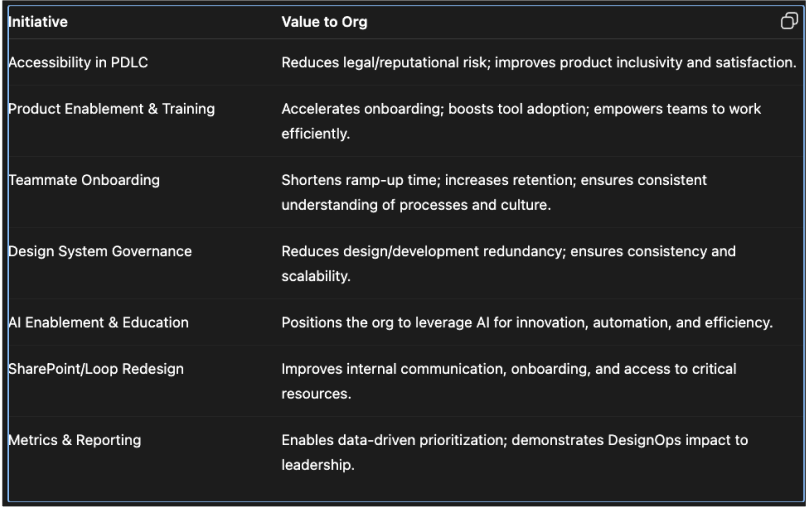
Created a foundation for AI-powered knowledge discovery and automation
Most importantly, knowledge became a shared asset, not an individual responsibility.
What I’d Do Next
With more time, I would:
Automate content freshness checks and reminders
Expand metadata-driven discovery and recommendations
Deepen AI integration for contextual knowledge access
Tools & Methods
Information architecture · Knowledge governance · Template systems · SharePoint & Loop · Cross-functional enablement · Documentation strategy