DesignOps Transformation & Roadmap
Defined the operating model, roadmap, and governance that aligned design work to product and business goals.
Context
As the design organization scaled, DesignOps work was happening but it wasn’t visible, structured, or operating from a shared strategy. Processes, tools, and enablement efforts existed in pockets, often driven reactively by immediate needs rather than a long-term operating model.
The team needed a clearer way to understand what DesignOps owned, how work was prioritized, and how impact was measured.
Problem
No centralized DesignOps roadmap or strategy
Inconsistent intake, prioritization, and ownership of operational work
Limited visibility into DesignOps impact and progress
Enablement efforts (tools, training, documentation) were reactive and hard to scale
Without a clear operating model, DesignOps risked being perceived as support rather than a strategic function.
My Role
Design Program Manager / Design Operations Lead
I owned the end-to-end DesignOps strategy and execution, partnering closely with Design, Research, Product, and leadership. My responsibility was to define how DesignOps operated, how work flowed, and how success was measured—while still delivering tangible enablement for teams.
What I Built
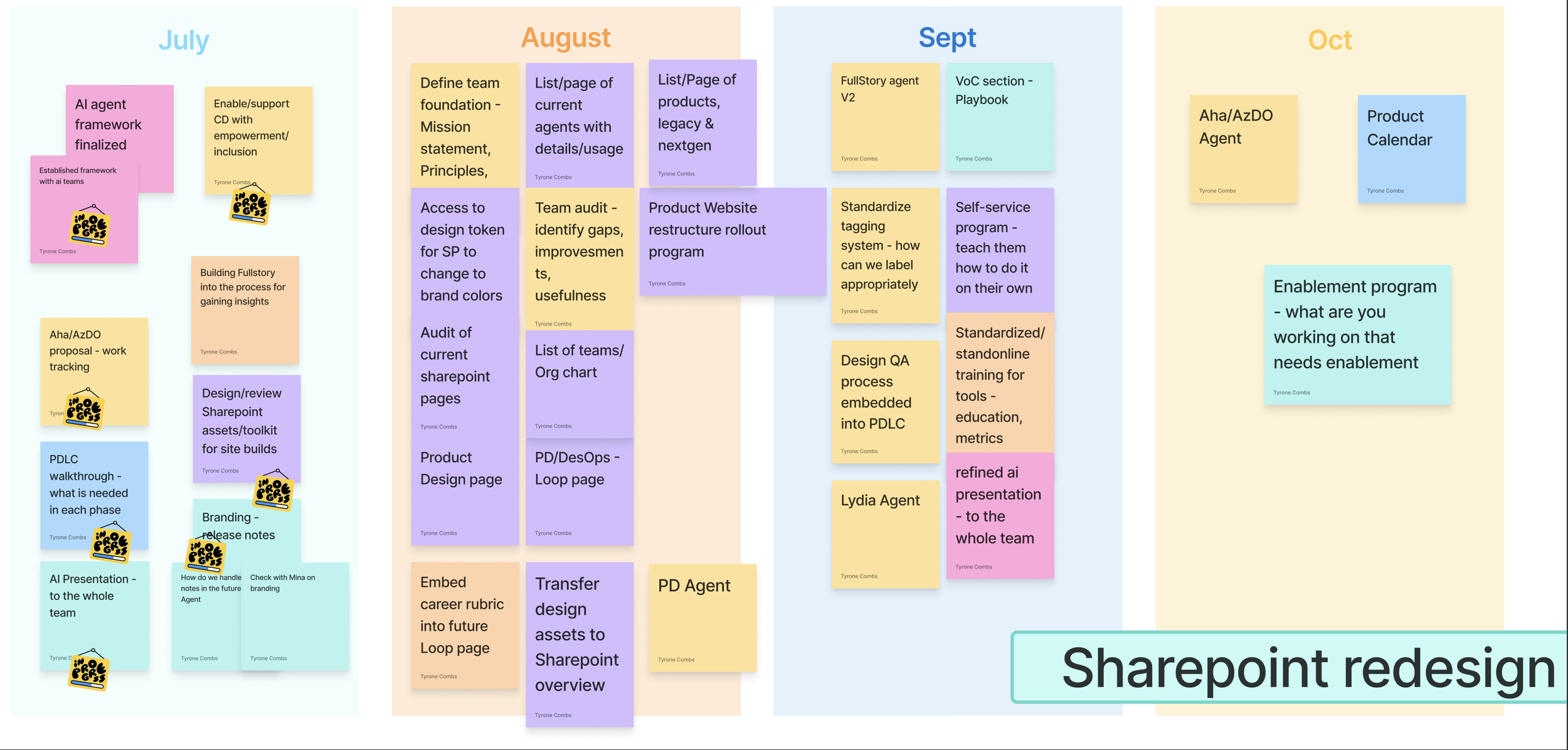
DesignOps Roadmap (Now / Next / Later)
I created a phased DesignOps roadmap to clearly articulate priorities over time, balancing immediate operational needs with longer-term capability building. The roadmap helped the organization understand what DesignOps owned, why it mattered, and how efforts connected to business and product goals.
The roadmap focused on:
Immediate stabilization and enablement (“Now”)
Building scalable systems and standards (“Next”)
Long-term maturity and automation (“Later”)
Rather than reacting to individual requests, DesignOps operated from a shared, forward-looking plan
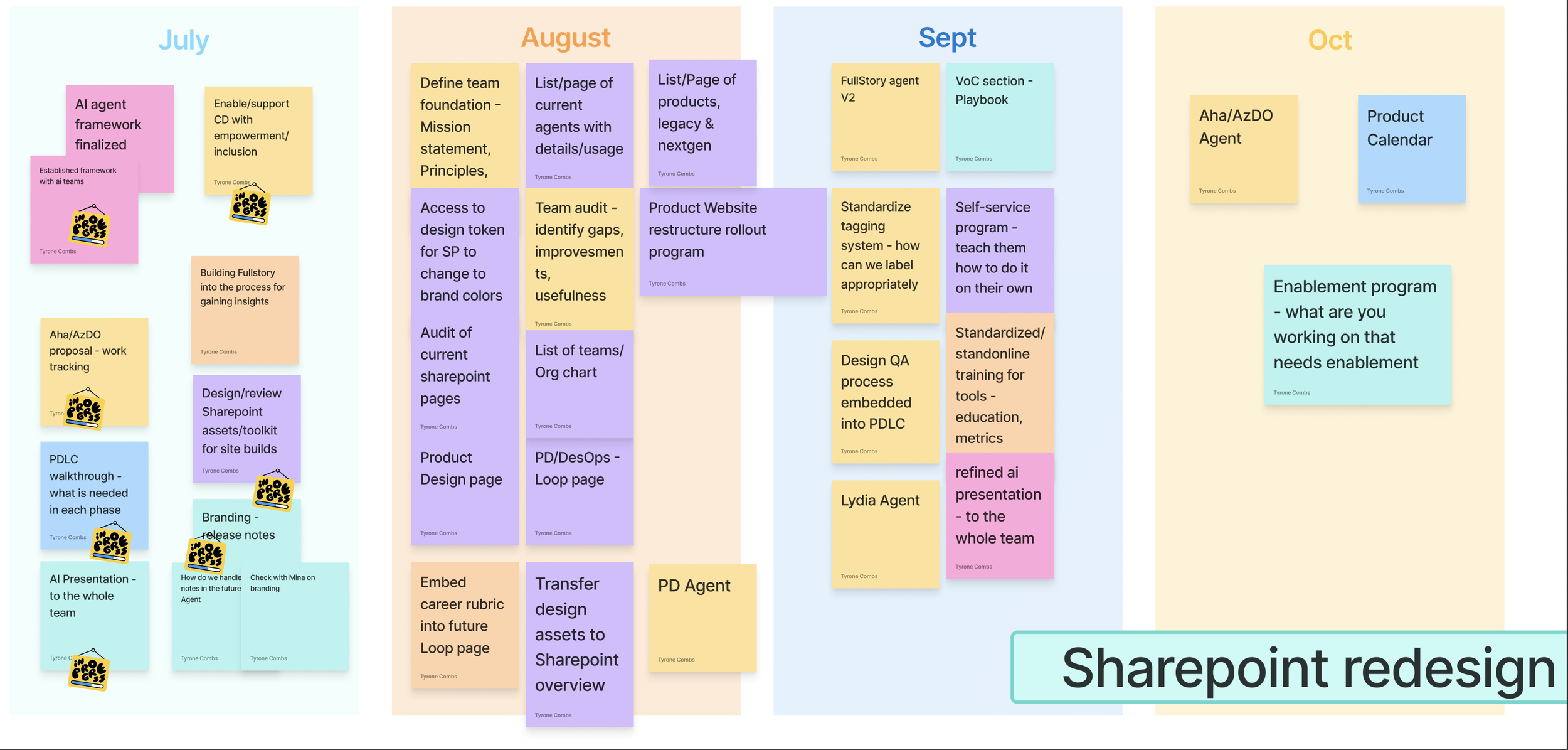
DesignOps Roadmap
Governance & Operating Model
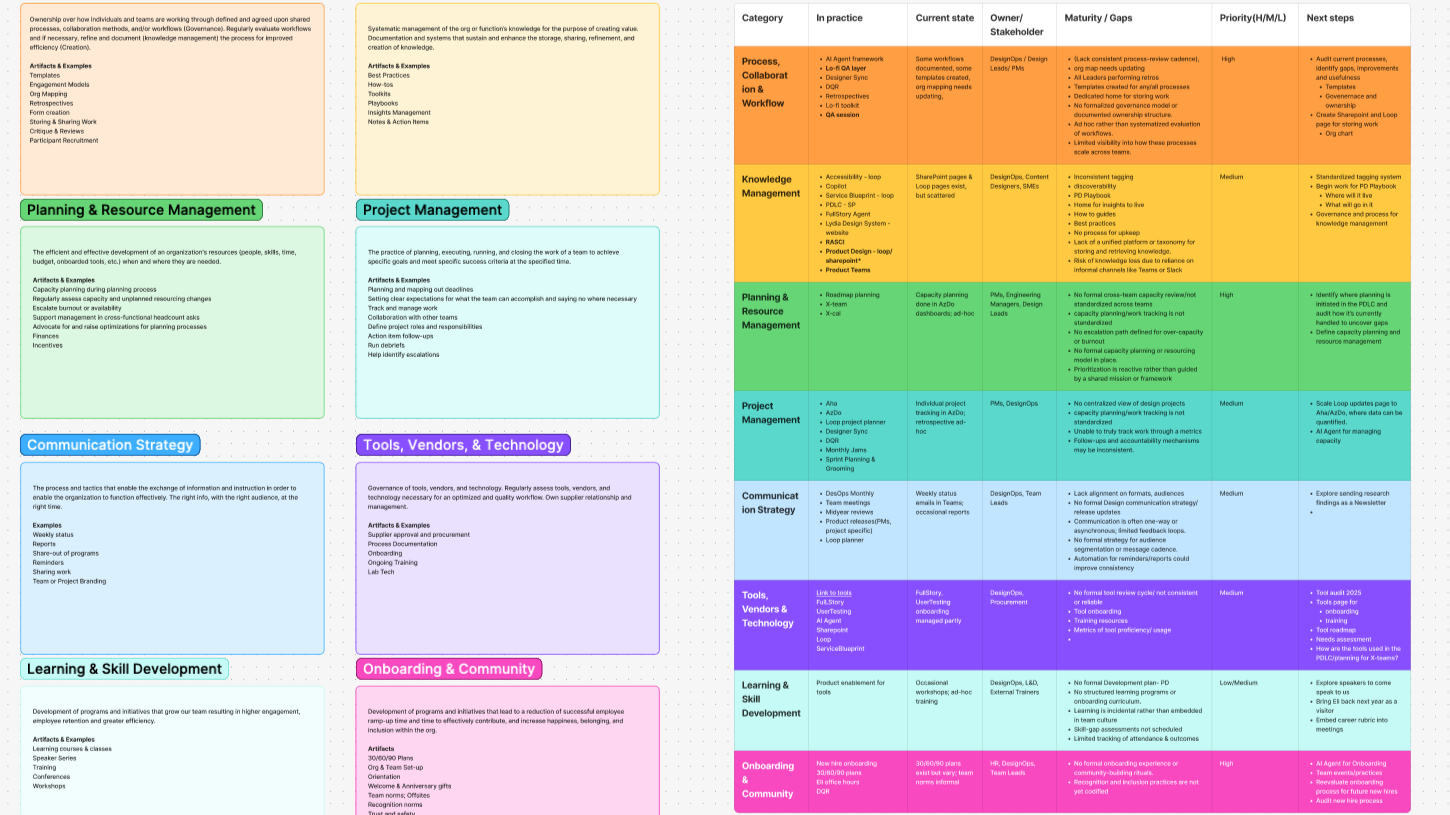
To support the roadmap, I defined a clear governance and operating model that made DesignOps work easier to engage with and easier to prioritize. This model clarified how work entered the system, how decisions were made, and who owned outcomes.
The operating model focused on:
Intake and prioritization mechanisms
Clear ownership and accountability
Decision-making and escalation paths
Alignment to product and organizational priorities
This shifted DesignOps from ad-hoc support to a managed, intentional program.
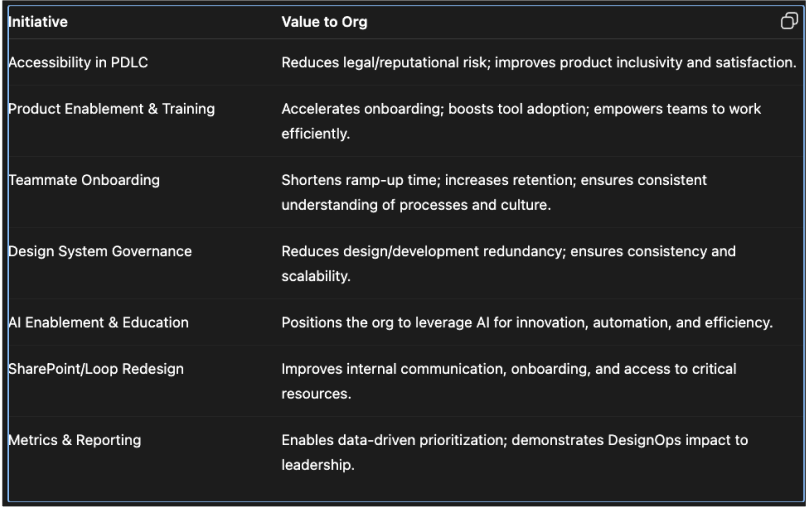
Governance view: initiatives mapped to organizational value
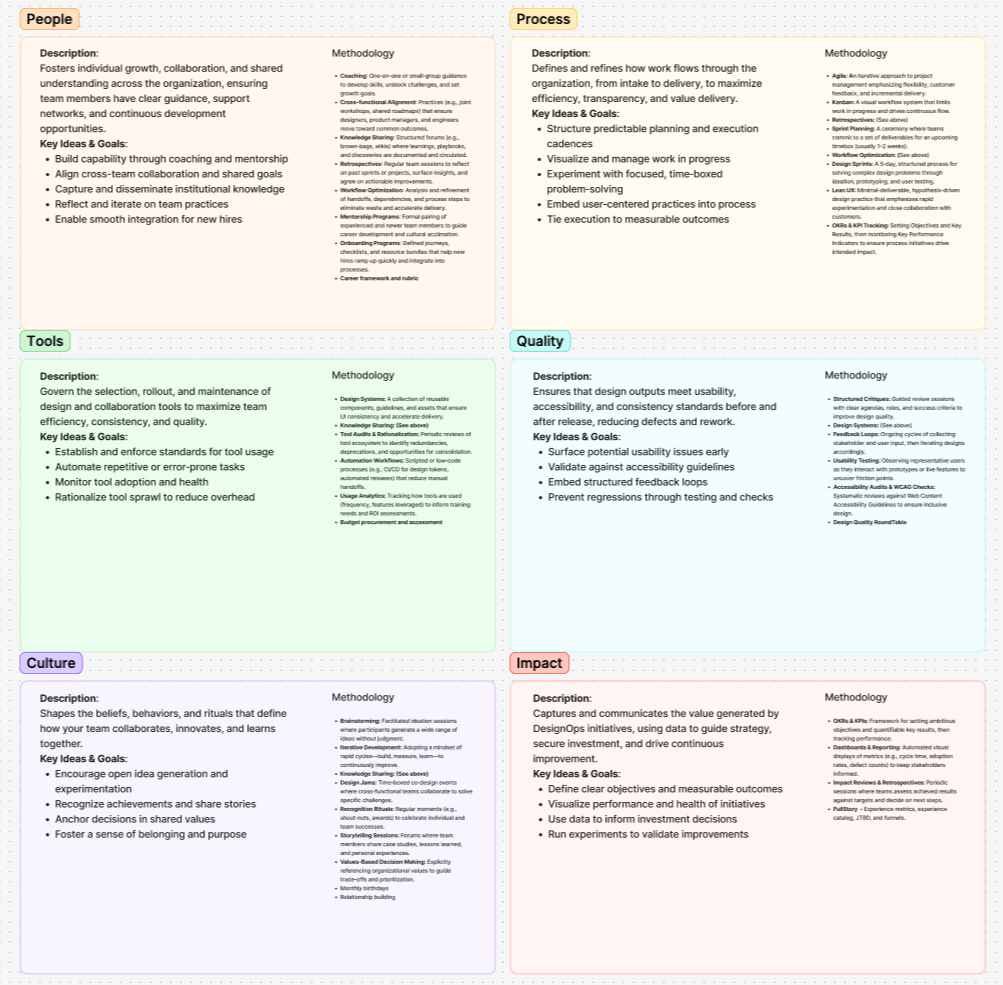
I established a lightweight metrics framework focused on:
Enablement and adoption
Consistency and quality
Operational efficiency
Rather than vanity metrics, the focus was on signals that showed whether systems were working.
Metrics & Impact Framework
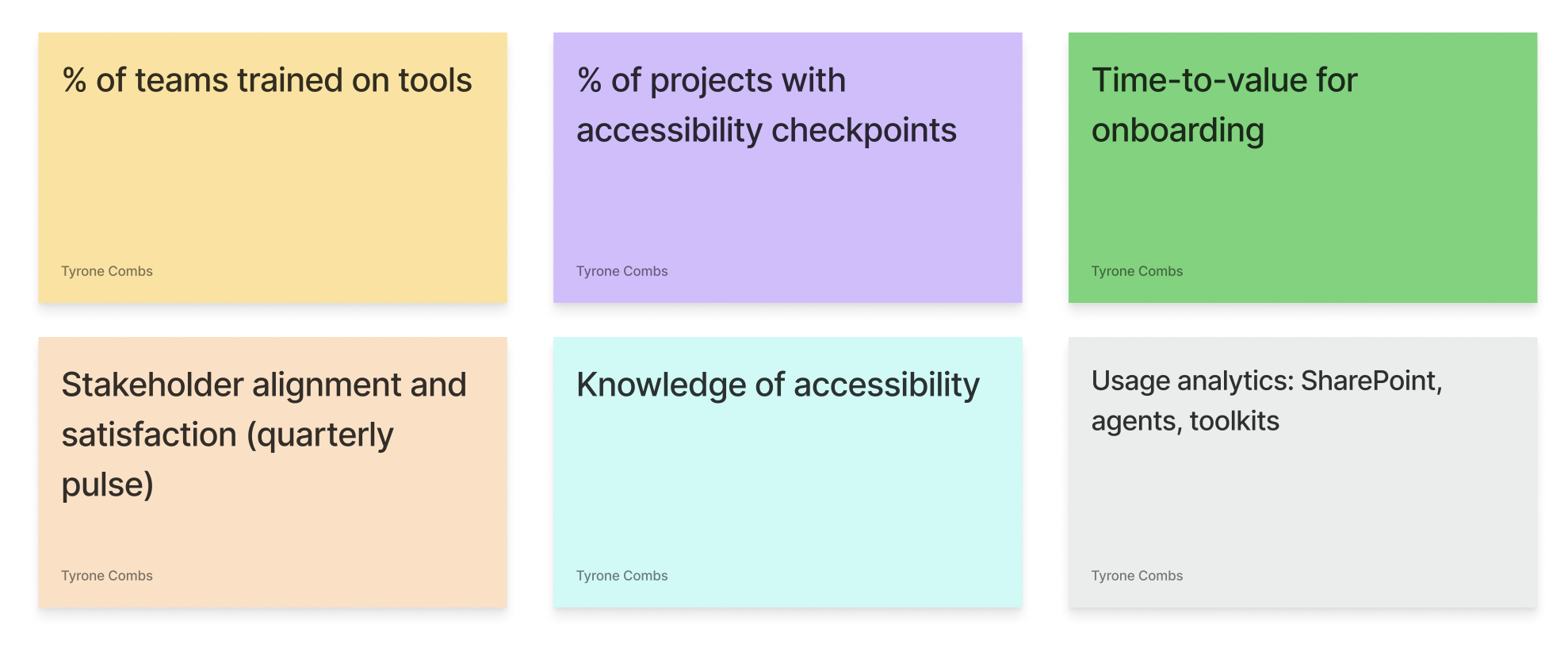
Outcome-focused metrics used to track DesignOps impact
Enablement & Execution Layer
To ensure the strategy translated into action, I paired the roadmap with execution mechanisms:
Training and onboarding programs
Documentation and self-serve resources
Communication cadence to reinforce priorities and progress
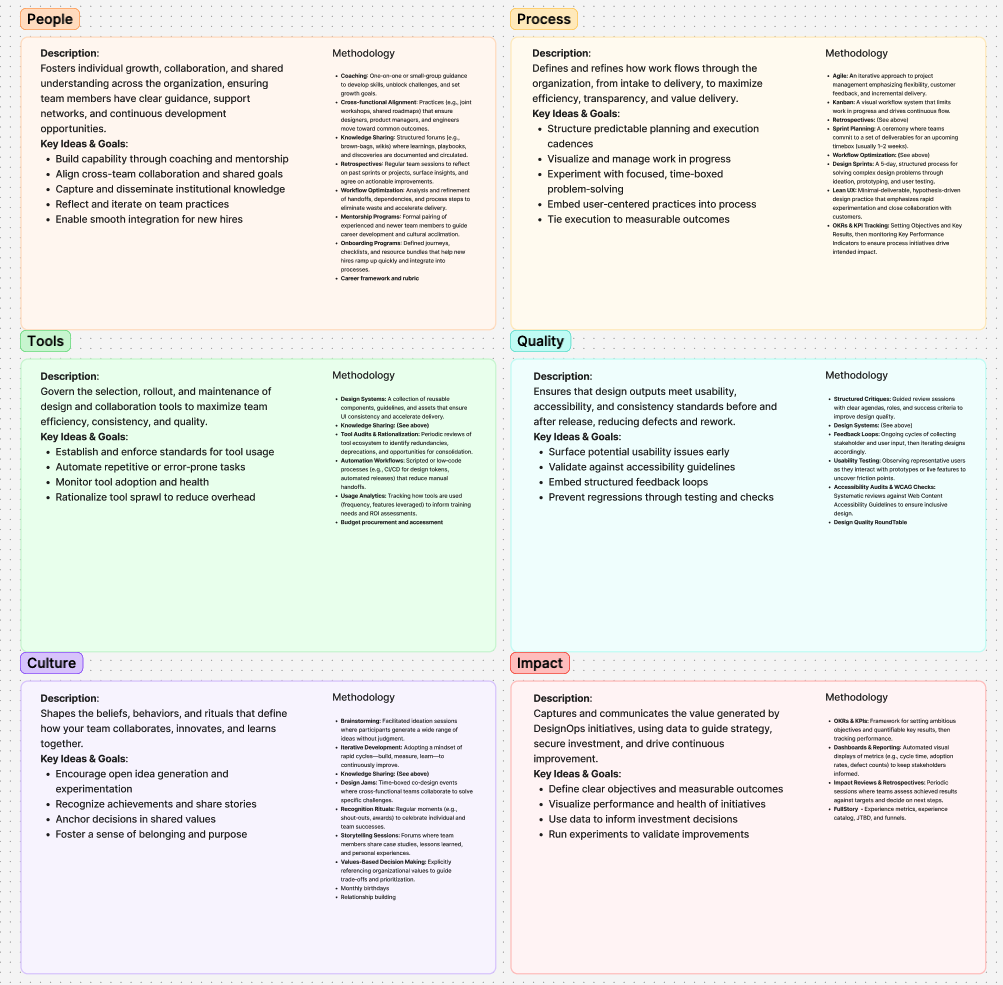
Enablement model connecting systems, people, and outcomes
Impact
Established a clear DesignOps operating model and strategy
Improved visibility into DesignOps work and value
Enabled teams through scalable systems instead of one-off support
Created a foundation for future initiatives including AI enablement, research operations, and accessibility
Most importantly, DesignOps became proactive and intentional, rather than reactive.
What I’d Do Next
With more time, I would:
Further automate intake and reporting workflows
Expand real-time dashboards for leadership visibility
Deepen cross-functional enablement beyond Design
Tools & Methods
DesignOps strategy · Program management · Roadmapping · Governance design · Metrics definition · Enablement systems · Cross-functional collaboration